


Joint Vibration Analysis (JVA)
Joint Vibration Analysis is a diagnostic technology that records the vibrations and sounds your jaw joint produces during movement. As you open and close your mouth, sensors placed at the joint capture that data and generate a detailed picture of how the joint is functioning.
Healthy joints move smoothly and quietly. Damaged or displaced joints produce characteristic patterns — friction, clicking, or irregular vibration — that show up clearly in JVA output. This gives us objective information about what's happening inside the joint rather than relying on subjective symptom reports alone.
JVA is painless, non-invasive, and takes only a few minutes. For patients who have been told their jaw issues are "probably just stress," seeing their joint data on screen is often the first time they feel their experience has been taken seriously.
Oral Appliances
A custom TMD oral appliance is not the same as a standard night guard. Where a night guard creates a protective surface between your teeth, a therapeutic TMD appliance is designed to reposition your jaw into a more stable, lower-tension relationship with the joint.
By reducing the load on the joint and surrounding musculature, an oral appliance gives the joint an opportunity to function with less strain. This is often a core component of a TMD management plan, particularly for patients with muscle-driven symptoms or disc displacement.
Every appliance we make is fabricated from impressions of your actual bite and calibrated based on your diagnostic findings. Fit, position, and function are all evaluated at delivery and adjusted as needed over time.
Laser Therapy
Therapeutic laser uses specific wavelengths of light to reduce inflammation, promote tissue healing, and relieve pain in the jaw joint and surrounding muscles. It's non-invasive, painless, and requires no recovery time.
For patients with acute jaw pain, muscle spasm, or inflammation in the joint, laser therapy can provide meaningful relief and is often used alongside other treatments as part of a broader TMD management approach. Sessions are brief and typically completed in-office.









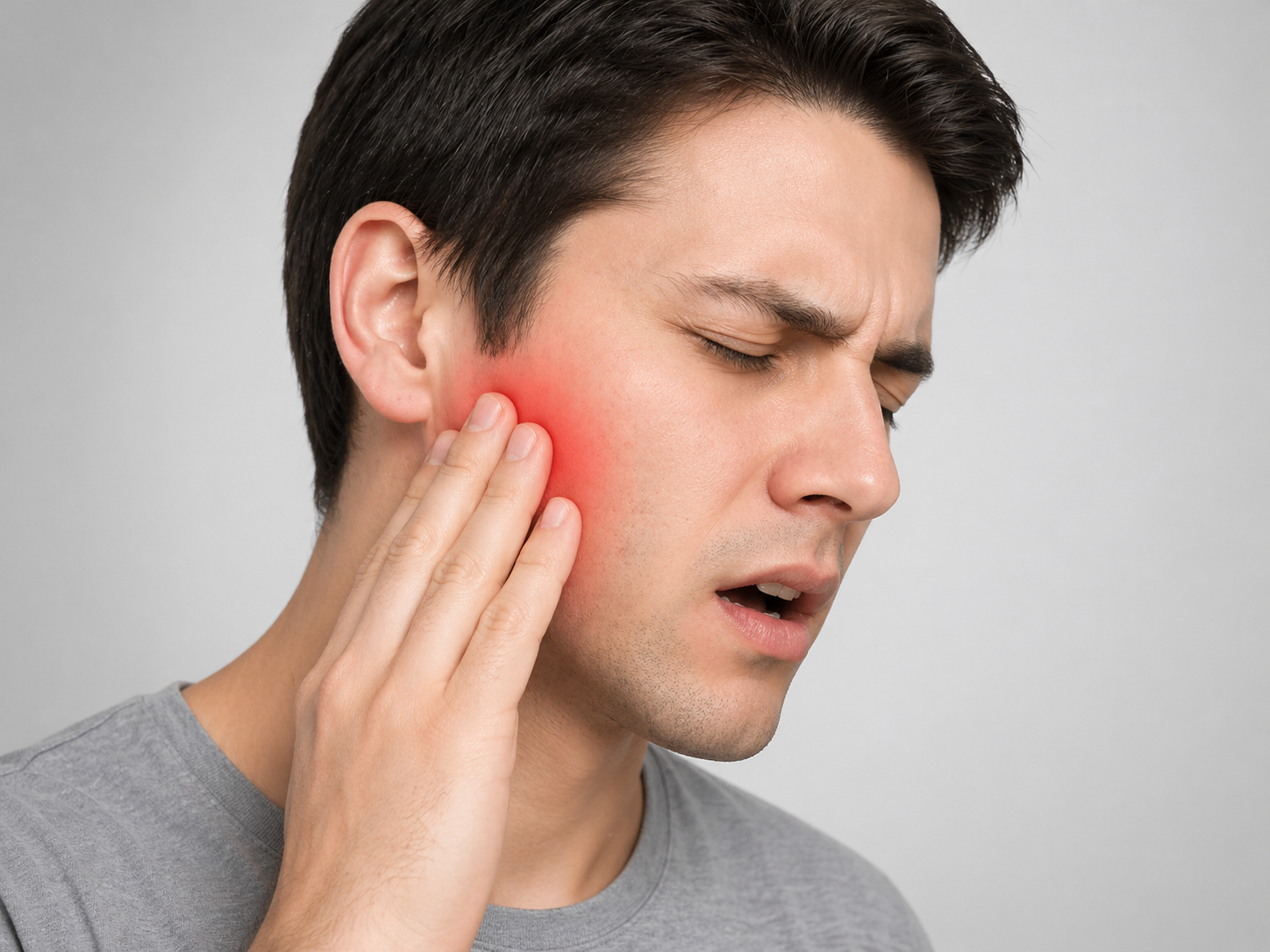
The most common symptoms include jaw pain or soreness, clicking or popping sounds when opening and closing the mouth, headaches, especially in the morning, earaches, or a sense of fullness in the ears, facial muscle tension, and limited jaw range of motion. Many patients also experience neck and shoulder pain tied to the same underlying muscle tension.
Joint Vibration Analysis is a non-invasive diagnostic procedure that records how your jaw joint moves and the vibrations it produces. Small sensors are placed against the joint while you open and close your mouth normally. It takes just a few minutes, is completely painless, and gives us objective data about your joint function that clinical observation alone cannot provide.
It depends on the nature and severity of the condition. Some patients experience significant symptom relief within the first few weeks of wearing an oral appliance. Others with more complex joint involvement require a longer management process. After your evaluation, we can give you a realistic picture of what to expect for your specific case.
Therapeutic laser used for TMD and musculoskeletal pain has a strong safety record and is cleared for use in the United States. It does not involve ionizing radiation, does not require anesthesia, and has no required downtime. Most patients find the sessions comfortable and report improvement in pain and muscle tension over a course of treatment.Therapeutic laser used for TMD and musculoskeletal pain has a strong safety record and is cleared for use in the United States. It does not involve ionizing radiation, does not require anesthesia, and has no required downtime. Most patients find the sessions comfortable and report improvement in pain and muscle tension over a course of treatment.